
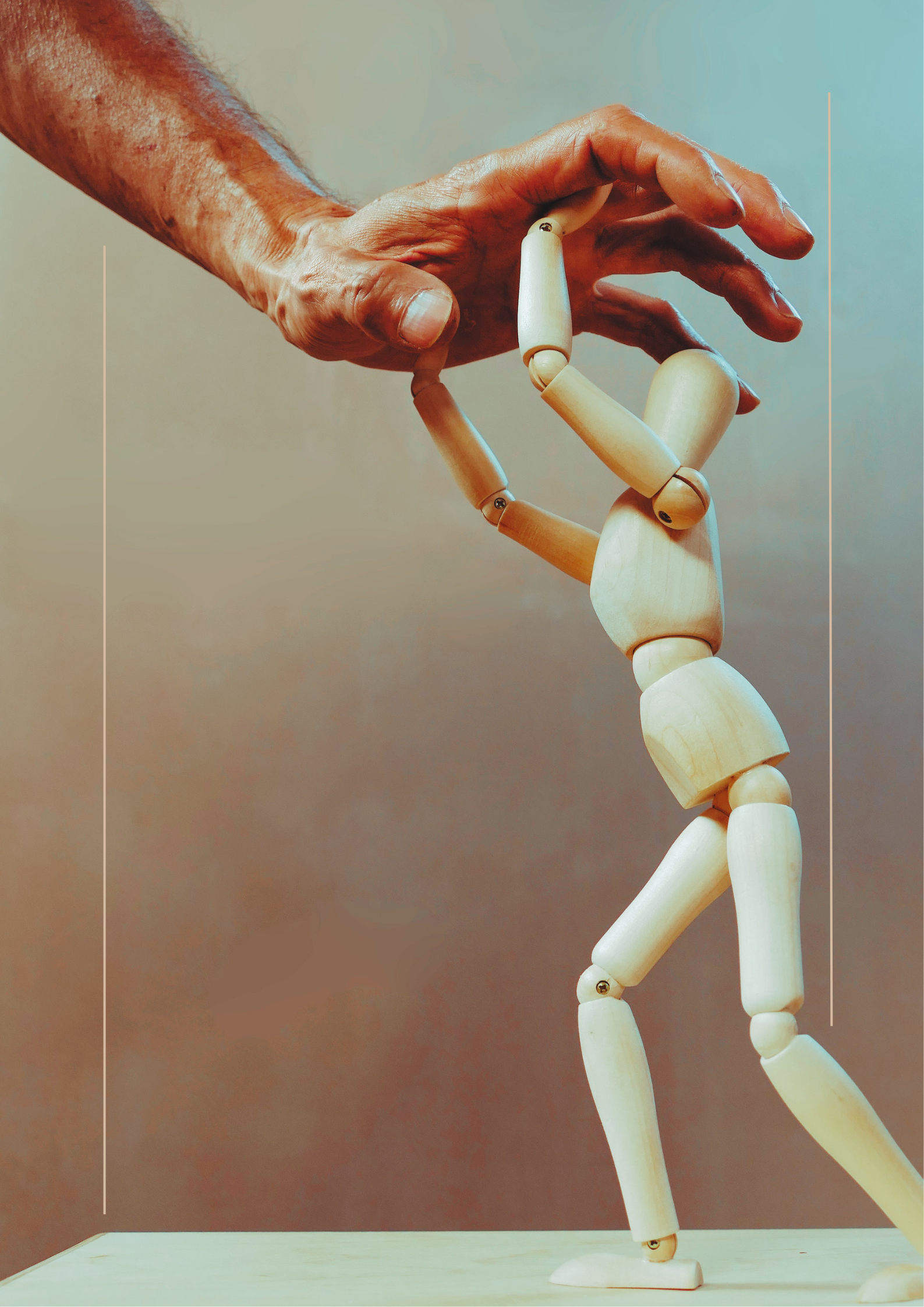
Somatics &
The Singing Body
Online Course (Recording available after course finishes)
March 12, 19, 26, April 2, 2026
Deep listening to re-pattern the body and reclaim the voice
In this course, Kate Smith, creator of The Embodied Voice, will unpack the concept of somatics and how she applies it to the field of voice.
We will look at what somatics means, how to apply it in voice work, and why it can be such a powerful tool for deep learning.
Somatics and Embodiment:
A Clarification
Embodiment and somatics have become buzzwords in recent years, but what do they actually mean, and why do they matter?
Embodiment is not simply the act of moving the body. Rather, it refers to being present to sensation and perception—to living through the body as an integrated self in ways that expand how we know, process, and respond to present experience.
Somatics is one way of fostering embodiment — an approach that emphasizes how we learn, how we attend, and how we relate to our own body.
Somatics, therefore, is an approach that grounds awareness in direct bodily experience, privileging perception and curiosity over control or correction.

Applying Somatics to the Voice
Over the years, Kate has been developing an approach to exploring vocal technique through experiential flows that lead participants to slow down, turn inward, and engage with the body in a way that is fundamentally different from a typical vocal warm-up or voice lesson. While not the only element of The Embodied Voice, these moments in her pedagogy have felt increasingly pivotal in creating the conditions for deep change — not by pushing, fixing, or improving, but through listening, attention, and embodied learning.
This course will offer insight into how the brain and body learn through sensitive engagement with attention, pacing, and quality of listening. Drawing on nervous system education, embodied cognition, and movement-based inquiry, we investigate how real change happens — at a cellular, perceptual, and relational level.
Applied to voice, this approach undercuts the idea that we can (or should) control the vocal mechanism from the top down. Instead, it invites a curious, relational process: learning to experience your voice as your body, developing trust in sensation, and becoming fluent in your own internal feedback.
This work asks for responsibility. No teacher can tell you what your body is experiencing. Instead, loose frameworks, targeted information, and gentle propositions guide you toward your own discoveries. From there, expressive movement, vocal improvisation, and emotional expression arise in a very different way: with more honesty, safety, and depth.
The course also situates this work within the lineage of somatic practice, touching on influences such as Alexander Technique, Feldenkrais, and Thomas Hanna, while articulating a contemporary application to voice and expressive work.

This course is for anyone interested in the meeting place of voice or movement who wants to:
Change how they relate to their body and create a more healthy, sustainable relationship to their voice
Understand learning as an embodied process
Cultivate an engaging, playful vocal practice that can accompany them throughout life
Connect their expression with felt sensation, thereby accessing a greater range of expressive capacity and deeper authenticity
Course Outcomes:
Through this course you will:
Understand what somatics actually means in practice — and how it differs from general ideas of embodiment
Develop the ability to feel and observe bodily experience at the same time, fostering the ability to make more embodied choices
Gather key principles of nervous system function and the neuroscience behind the voice
Gain tools for working with voice as a means of soothing, regulating, and connecting
Experience voice as an integrated, whole-body process
Curriculum Overview
Session 1: The Hows and Whys of Somatics
We begin by shaping our definition of somatics via learning about the nervous system.
Topics include:
Learn the basics of the nervous system and how it works
Training our ability to sense as a form of deep listening, accessing the subconscious, and adjusting to body-time
Meeting edges and challenges through pendulation
Looking at the vagus nerve, regulation and self-soothing
Moving away from dominant cultural narratives around learning and effort
Session 2: Applying Somatics to Voice — Voice as Body
This session explores the voice not as something we “use,” but as something we are.
Topics include:
Rethinking “breath support”
Voice as a whole-body pressure and resonance system
Biotensegrity, fascia, and force transmission
Exploring the diaphragms as a coordinated, whole-body network
Kinetic chains: from toes to tongue
Session 3: Movement as a Way of Knowing
Here, movement becomes a tool for learning about our bodies and expanding our expressive capacity.
Topics include:
Sensory perception, including proprioception and interoception
Brain–body maps, the importance of our self-image
Sensori-motor feedback loops and experiential/embodied learning
Session 4: Somatics for Expression and Relation
This final session widens the lens to include others and the world around us, touching upon cultivating expression that is grounded, relational, and responsive rather than performative or forced
Topics include:
Why expression is relational - mirroring, kinesthetic empathy, and mirror neurons
Voice as a means of reclaiming our ability to feel (and express) emotion
Co-regulation and co-expression through sound, practicing being in your body with others
Collective expression and shared presence, the political implications
Meet your facilitator
The Embodied Voice is the creation of singer Kate Smith. A vocal acrobat, composer, and facilitator known for her seamless blend of musical precision, free improvisation and physical exploration, Kate’s many-faceted creative endeavours address themes of presence, the body-mind relationship, and human rewilding, through the expressive shaping of voice, movement and improvisation.
The Embodied Voice emerged from Kate's voracious desire to draw connections between practices, searching for fundamental ways of being that transcend genre and dogma. Drawing on a deep commitment to embodied research, Kate likes to question received wisdoms through experimentation and playful curiosity.
As a result, the practice draws on many influences including yoga, Alexander Technique, Feldenkrais Method®, Body-Mind Centering®, mindfulness, contact improv, dance, and theatre. Kate has studied with a variety of leading artists in the voice and movement fields, including Meredith Monk, Bonnie Bainbridge-Cohen (BMC), Seke Chimutengwende, Margaret Pikes (Roy Hart Theatre), Grzegorz Braal (Song of the Goat), and more. She studied Feldenkrais-based vocal pedagogy with Robert Sussuma, and is a 200hr Yoga-Alliance certified teacher of Authentic Flow Yoga. She is grateful for the inspiration of her colleagues and mentors, including Jenni Roditi (TIC), Guillermo Rozenthuler, David Eskenazy and more. Kate has also trained in trauma-informed and resilient nervous system facilitation as certified by the Complementary Medical Association (CMA).
Her workshops can run the gamut from sessions of soulful sounding, to technical lessons on voice-body anatomy, to creative games for embodied musicality, to wild and playful movement explorations. What holds all the diversity of approach together is Kate's consistent commitment to holding safe and welcoming spaces that encourage us to reconnect to our essential being.

Booking
Sometimes you may need a space/carpet/matt to lie down, as well as a cushion or block to sit on. Please wear clothing you feel comfortable moving in.
Classes will be recorded so that people who are unable to attend in person can catch up later. However, we will need a basic quorum present in order to run the class, so please let me know in advance if you will not be able to attend some sessions in person. Recordings may be shared publicly after the course concludes, so please inform me if you prefer not to be recorded.
Dates
Thursdays 17h30-19h30 UCT/GMT
March 12, 19, 26, April 2
Investment
This course is offered on a sliding scale in order to enable people from all backgrounds to share the space together. With no questions asked, please select the contribution that matches what you feel able to offer in support of this work. Thank you.
Reduced £80 / €90
General £120 / €140
Abundant £160 / €180
*If you are signed up for The Embodied Voice Practitioner Training, this course is included complimentary, free of charge.